
Why irrigation freezes here
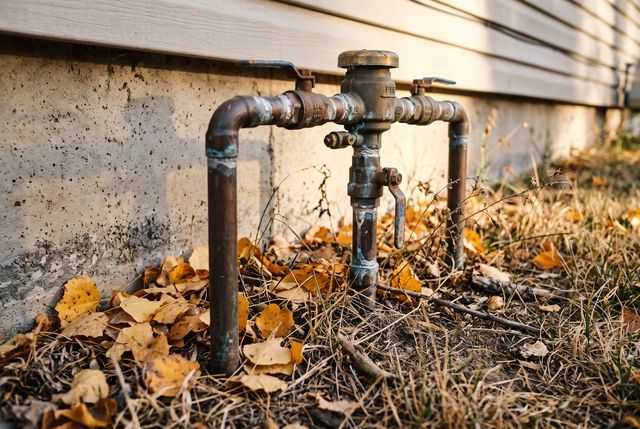
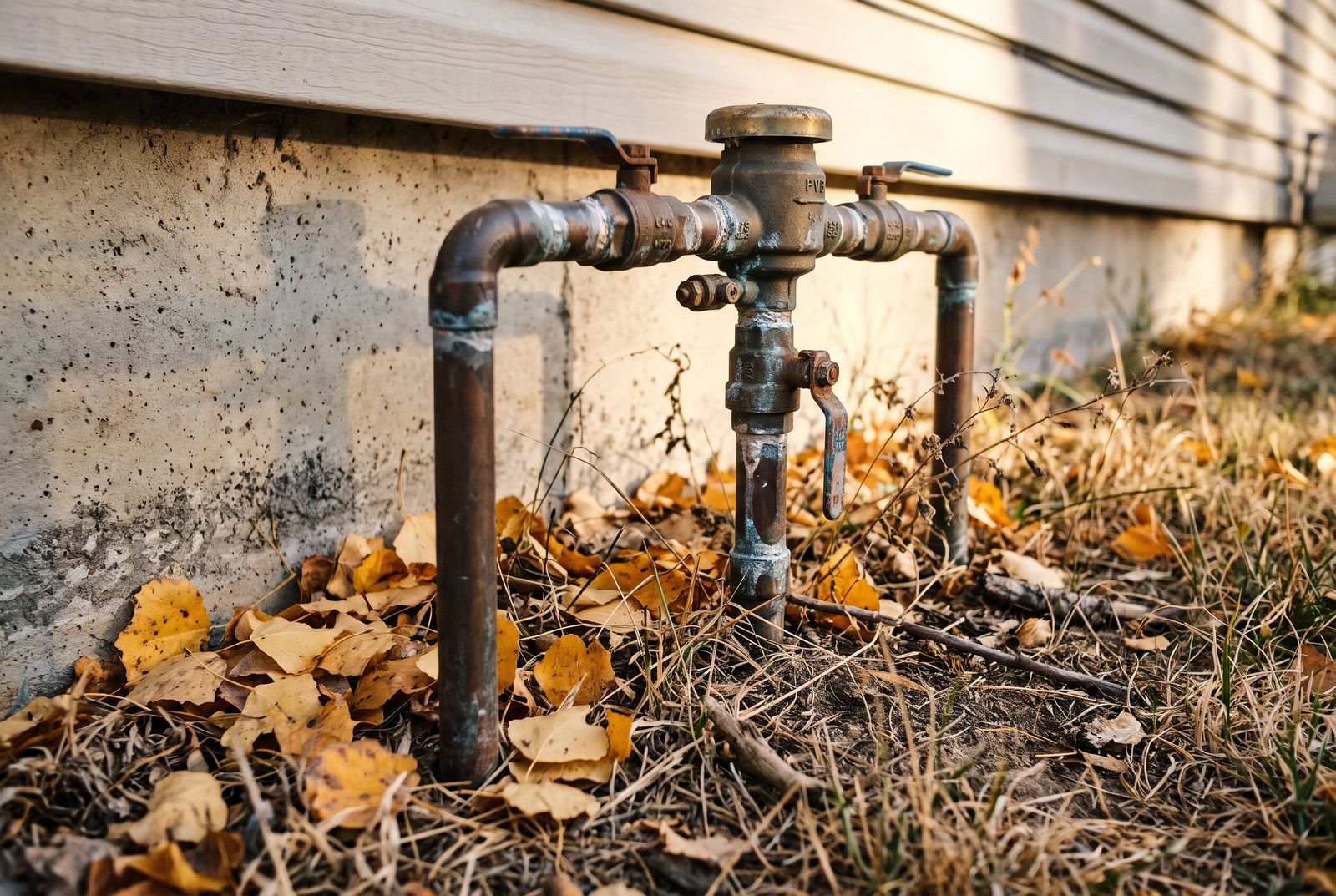
Most Front Range irrigation lines are buried only a short depth, well above where the ground freezes in a cold winter. Water left in those lines expands as it freezes and can split pipe, crack fittings and break sprinkler heads. The backflow preventer is even more exposed: it sits above ground, often on a shaded side of the house, and its brass castings crack when water freezes inside them.
The fix is to get the water out before the first hard freeze. On much of the Front Range that often means October, sometimes sooner. A single cold night after warm weather can do the damage, so most people schedule the work by early October instead of watching the forecast day by day.
Know your parts before you touch anything
Spend ten minutes identifying the pieces of your system. It makes both DIY work and conversations with an irrigation tech much easier.
| Part | Where it usually is | What to know |
|---|---|---|
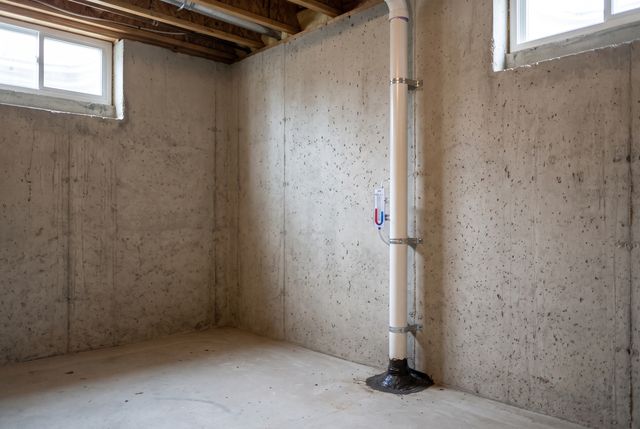
| Irrigation shutoff valve | Basement or crawl space, on the line that branches to the yard | Closing it stops water to the whole system; there is often a small drain cap beside it |
| Backflow preventer | Above ground near the foundation | Has two ball valves and small test cocks; must be drained and left in the right position |
| Zone valves | In a green valve box in the yard | Open one zone at a time during a blowout |
| Controller | Garage wall | Used to open zones; switch to rain or off mode for winter |
DIY or hire? Two-minute check
Answer three questions. The tool gives a straight recommendation.
Should you blow out your own system?
Three questionsHow a blowout works
A blowout pushes compressed air through each zone until the water is gone. The order matters, and so does the volume of air. The rough sequence used by most irrigation techs looks like this:
- Shut off the waterClose the irrigation shutoff inside the house and open its small drain, if it has one.
- Connect the compressorAttach to the blowout port or the test cock on the backflow assembly using the right fitting, with the backflow ball valves positioned per the device instructions.
- Open a zone firstAlways have a zone open before air goes in. Air with nowhere to go builds pressure in the pipes.
- Blow each zone in short burstsRun until heads spit only mist, move on, and come back for a second pass. Let the compressor recover between zones.
- Set the backflow for winterDisconnect the air and leave the ball valves and test cocks partly open so any remaining water can expand.
Keep air pressure moderate. Higher pressure does not clear lines faster; volume does. Too much pressure, or running air through a zone for long stretches once it is dry, can overheat fittings and damage heads. Many manufacturers publish pressure guidance for their heads and valves, and it is worth reading before you start.
Wear eye protection and stand clear of heads while air runs. Never stand over the backflow preventer while it is pressurized.
Mistakes that cost money
- Waiting too long. One hard freeze with water in the backflow assembly is enough to crack it.
- Closing the backflow ball valves fully for winter, which can trap water between them.
- Using a small compressor for long runs, which leaves water behind and overheats the tool.
- Forgetting the drip zone, which often needs its own pass at lower pressure.
- Leaving the controller on, so it tries to open valves all winter.
If you hire the blowout, book early. Fall calendars fill quickly, and the companies that do this well are usually busy. The contractor vetting guide covers what to ask any service company.
Spring startup without surprises
The spring mistake is the mirror image of the fall one: turning water on too early. Wait until hard freezes look unlikely for your area, which on the Front Range is often well into spring. Then close the test cocks, set the backflow ball valves to the closed position, and open the main irrigation valve slowly. Opening it fast can send a pressure surge through the system.
Once the system is pressurized, open the backflow ball valves slowly, then run each zone manually and walk it. Look for geysers from broken heads, soggy spots that suggest a leak, and heads tilted or buried by winter. Program the controller for the season afterward, not before.
- water sprays from the backflow preventer when you open the main valve
- shut it off. The device may have cracked over winter and needs repair or replacement.
- a zone will not come on
- check the controller wiring and the valve solenoid before assuming a broken pipe.
- one area stays wet days after watering
- suspect a cracked lateral line or leaking valve and have it located.
Watering wisely in a dry climate
Many Front Range water providers set watering rules, such as limits on time of day or days per week. Check your own provider's current rules each spring. Early morning watering reduces evaporation and wind drift. A catch-cup test, placing identical containers around a zone and comparing how much each collects, shows whether coverage is even before you raise run times to fix one brown spot.
Keep spray off the house. Water hitting siding or pooling at the foundation is a slow, steady source of damage, and the seasonal calendar includes a midsummer zone walk for exactly that reason.
Common questions
When should I blow out my sprinklers in Colorado?
Before the first hard freeze, which on much of the Front Range often arrives in October and sometimes earlier. Mountain and high-plains homes should plan earlier. A light frost is not the same as a hard freeze, but the exposed backflow preventer is the first part to suffer, so do not cut it close.
Can I just drain my sprinkler system instead of blowing it out?
Some systems have manual or automatic drain valves at low points and can be drained. Many Front Range systems are not designed that way and rely on compressed air to clear the lines. If you do not know which you have, ask an irrigation tech to show you at the next service.
What is the brass thing sticking out of the ground by my house?
It is almost always the backflow preventer, often a pressure vacuum breaker. It keeps irrigation water from flowing back into your drinking water. It sits above ground, so it is exposed to freezing and needs to be drained and set correctly every fall.
Do I need to insulate the backflow preventer?
An insulated cover can help during an early cold snap after the system is drained, and some homeowners use them all winter. It is not a substitute for draining the device, because trapped water will still freeze in a hard cold spell.
Have an irrigation question before the freeze?
Describe your setup and what you are unsure about. You will get general guidance by email.