
The first hour after the storm
When the hail stops, the useful work is fast and simple. Check for active leaks inside: ceilings below the attic, around skylights, and at the tops of exterior walls. If water is coming in, put a bucket under it, move belongings, and if a ceiling is bulging with water, poke a small hole to let it drain in a controlled way before the drywall gives out.
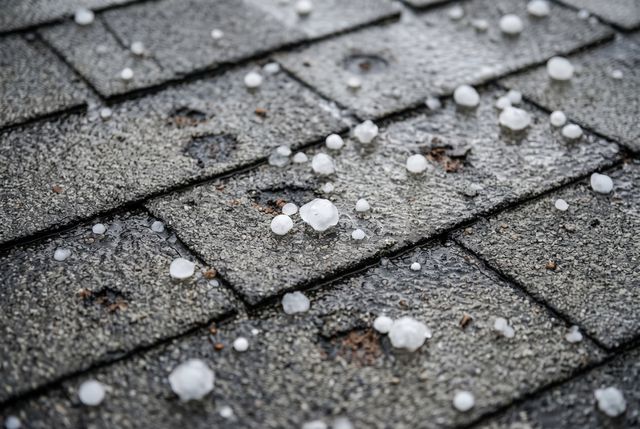
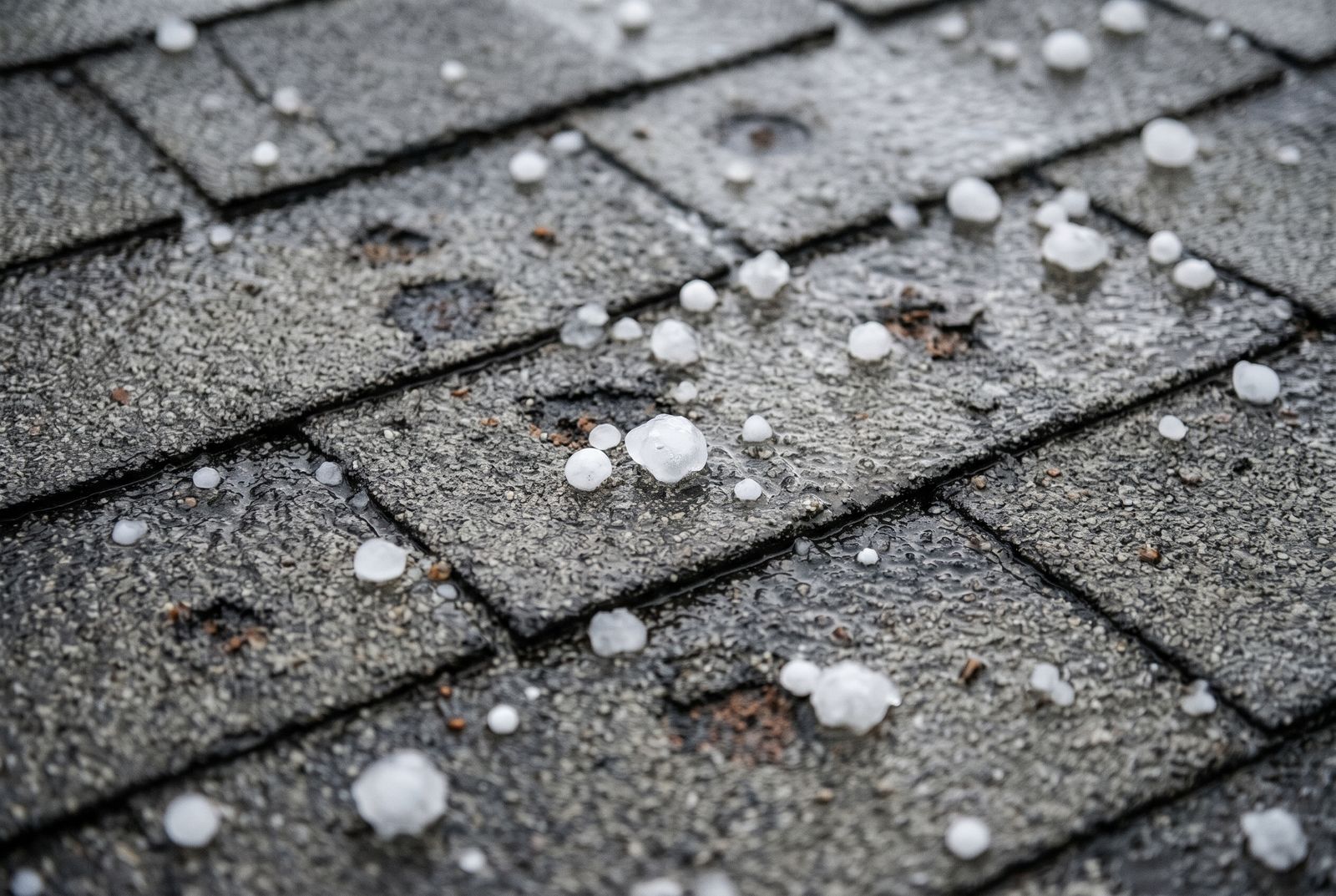
Then go outside with your phone while the evidence is fresh. Hailstones melt quickly. A photo of stones next to a coin or a ruler, with the time stamp, is one of the best records you can have of storm size. Photograph the yard, the deck, cars and anything else that shows what came down.
Wet shingles covered in ice pellets are extremely slippery, and stepping on damaged shingles can crack them further. Everything on the checklist below can be done from the ground, a window, or a stable step stool at the gutter line.
Post-storm ground check
Work through this list in daylight within a day or two of the storm. Your ticks are saved in this browser, so you can stop and come back.
After-hail walkaround
0 of 10 checkedWhat hail damage actually looks like
Soft metals are the easiest tell. Aluminum gutters, downspouts, roof vents and air conditioner fins dent readily, so if they show fresh dings, the roof took the same hits. Fresh dents look bright or clean compared to old weathered ones.
On asphalt shingles, hail can knock granules loose, leaving dark circular spots, and it can bruise the shingle, cracking the fiberglass mat underneath while the surface looks almost intact. A bruise often feels soft when pressed, like a bruise on fruit. That is why the hands-on part belongs to a professional: it takes experience to tell hail bruising from blisters, foot traffic scuffs, or normal aging.
| What you see | Typical of hail | Often something else |
|---|---|---|
| Dark spots | Random pattern, roughly round, fresh exposed asphalt | Uniform granule loss across a slope from age |
| Soft spots | Give when pressed, mat cracked under the impact | Blisters from trapped moisture during manufacture |
| Granules at downspouts | Sudden heavy deposit right after a storm | Light, steady shedding on a new roof |
| Cracked or missing tabs | With dents on nearby metals | Wind lifting, especially along edges and ridges |
Document everything for insurance
Insurance conversations go better when you can show what the house looked like before and after. If you took baseline photos in spring, as the seasonal calendar suggests, you are already ahead. After a storm, add wide shots of each elevation, close-ups of damaged items, and the hailstone photos.
Before you call, read your policy. Look for how roof damage is settled (replacement cost or actual cash value), whether there is a separate wind or hail deductible, any cosmetic damage exclusions for metal surfaces, and the deadlines for reporting a loss. Those terms vary widely, and knowing them up front keeps surprises out of the adjuster visit.
- Read your policyNote the deductible type, settlement method and reporting deadlines.
- Report the claim yourselfCall your insurer or agent directly. You do not need a contractor to start a claim.
- Be present for the adjusterWalk the property together and show your photos and notes.
- Get the estimate in writingCompare it line by line with any contractor's scope before you sign anything.
Getting a roof inspection
If your ground check turned up dents, granules or interior signs, a close inspection is worth it. Many roofing contractors inspect at no charge after storms, which is fine as long as you understand they are also hoping to sell the job. If you want a second opinion with no repair work attached, some independent home inspectors and roof consultants offer roof-only inspections for a fee.
Ask whoever inspects to photograph what they find, mark the test squares they examined, and explain how they distinguish hail from wear. A good inspector will show you the evidence, not just announce a verdict.
"Can you send me the photos from the roof with each damaged spot marked, before we talk about a contract?" A contractor who resists this is worth a pause.
Spotting storm chasers
Large hail events draw out-of-area crews within days. Some are legitimate companies traveling for work; some disappear after collecting deposits. Colorado's residential roofing law (in Title 6, Article 22 of the Colorado Revised Statutes) sets rules for roofing contracts, including a written contract with scope and cancellation terms, and a ban on contractors paying or waiving your deductible. Read the current statute text from the Colorado General Assembly if you want the specifics.
- someone offers to "take care of" your deductible
- walk away. That offer is prohibited for roofing contractors in Colorado.
- you are pressed to sign on the doorstep "to hold your spot"
- decline and collect other bids first. Legitimate demand does not require same-day signatures.
- the company has no local address or the phone goes to voicemail
- ask who will handle warranty calls in five years, and check the business with your city and the Secretary of State.
The contractor vetting guide has a scorecard you can use on each bid.
Roofing materials and hail
If you are replacing a roof, impact resistance is worth a serious look. Many manufacturers sell shingles tested to the UL 2218 impact standard, with Class 4 as the highest rating. Some insurers offer premium credits for Class 4 roofs; ask yours before you choose. Impact-rated does not mean hail-proof. Large stones can still damage any material, and cosmetic dents on metal roofs may or may not be covered depending on your policy wording.
Whatever you choose, installation quality matters as much as the product. Proper nailing, underlayment, ice and water barrier at the eaves, and flashing details decide whether a roof sheds a June storm and a January ice dam. Our snow and ice dam guide explains why the eaves need extra protection here.
Common questions
Can I tell if my roof has hail damage from the ground?
Sometimes. Dented gutters, downspouts, vents and window screens are good indirect clues, and binoculars can show missing or creased shingles. Bruising on asphalt shingles, where the mat is fractured under the granules, usually needs a close, hands-on look by someone who inspects roofs regularly.
How long do I have to file a hail claim in Colorado?
Deadlines are set by your policy and by state law, and they change. Read the "duties after loss" and claim deadline sections of your own policy, and call your insurer or agent if anything is unclear. Reporting promptly is almost always the safer choice.
Is it legal for a roofer to cover my deductible?
Colorado's residential roofing law prohibits roofing contractors from paying, waiving or rebating a homeowner's insurance deductible, or promising to. A contractor who offers this is a red flag. Read the current statute or ask your insurer if you want the details.
Should I get on the roof myself after a storm?
No. Wet or hail-covered shingles are slippery, and walking on a damaged roof can cause more damage. Do your checks from the ground and from windows, and leave the roof itself to an experienced inspector or contractor.
Trying to make sense of an inspection or estimate?
Describe what you were told and what you are seeing. You will get general guidance on questions to ask next.