
This page summarizes public guidance from the U.S. Environmental Protection Agency and points to Colorado's state radon program. It is general information. CO Homes Pro does not test for or mitigate radon, and this is not medical or professional advice.
What radon is and why Colorado tests for it
Radon forms as uranium in soil and rock breaks down. It moves up through the ground and enters houses through cracks in slabs, gaps around pipes, sump pits, crawl spaces and the joints where floors meet walls. A house tends to draw soil gas in, especially in winter when warm air rising inside creates slight suction at the lowest level.
The EPA identifies radon as a leading cause of lung cancer after smoking. The risk comes from long-term exposure, which is why the goal is to know your home's typical level and reduce it if it is high. Panic is not useful; a test is.
Colorado's public health department considers elevated radon common across the state, in every kind of house: old and new, with basements or on slabs, in the mountains and on the plains.
Where the state radon program fits in
The Colorado Department of Public Health and Environment radon program is the best starting point for Colorado-specific information. Over the years it has offered free or discounted test kits, lists of resources, and information about assistance for some households that need mitigation. What is available changes, so check the program page for current offers instead of relying on any third-party summary, including this one.
For national guidance, the EPA radon pages explain testing protocols, action levels and how to find qualified professionals. Many county public health agencies in Colorado also run radon outreach, especially in January, which is National Radon Action Month.
How to test, step by step
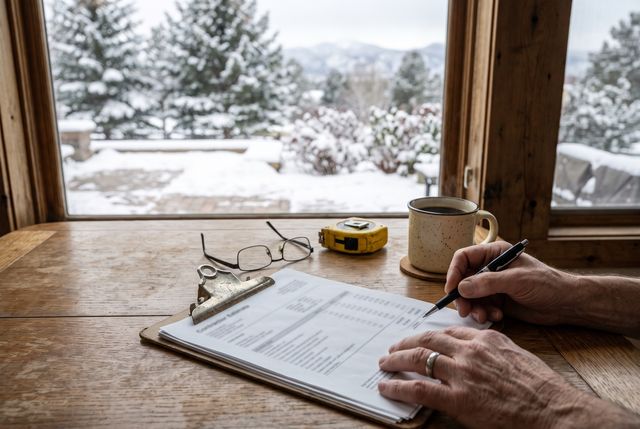
Do-it-yourself test kits are widely available and work well when you follow the instructions exactly. Short-term tests run from two to ninety days; many common kits run a few days. Long-term tests run more than ninety days and give a better picture of your yearly average.
- Pick the right spotTest on the lowest level you use or could use as living space, in a room like a bedroom or family room, not in a kitchen, bathroom or laundry.
- Close the houseFor short-term tests, keep windows and exterior doors closed, except for normal coming and going, starting at least 12 hours before and throughout the test.
- Place it correctlySet the kit away from drafts, exterior walls, heat sources and high humidity, at roughly breathing height off the floor.
- Record the timesWrite down the exact start and stop times, then mail it to the lab promptly.
- Keep the reportFile the result with your house records. You will want it when you sell or retest.
Winter is a good time to test in Colorado, because the house is closed up for weeks at a time and conditions tend to be steady. The seasonal calendar puts radon testing in January and November.
Read your result
Radon in air is reported in picocuries per liter (pCi/L). Enter your number to see what EPA guidance suggests next.
Radon result reader
Based on EPA guidance| Level | EPA guidance |
|---|---|
| 4 pCi/L or higher | Action level: fix the home, after confirming a short-term screening result with a follow-up test |
| 2 to under 4 pCi/L | Consider fixing; no level is known to be risk-free |
| Below 2 pCi/L | Lower risk; retest periodically and after changes to the house |
How mitigation works
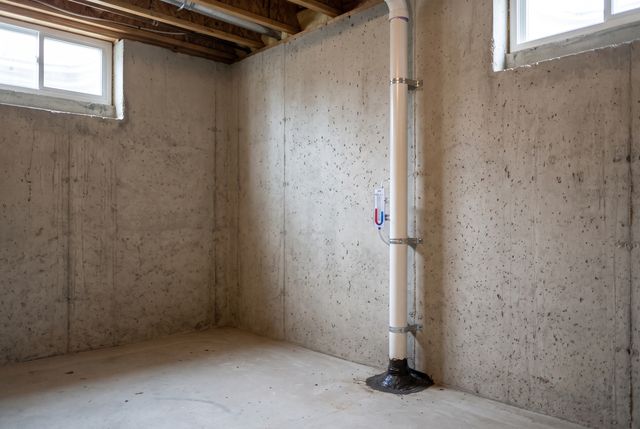
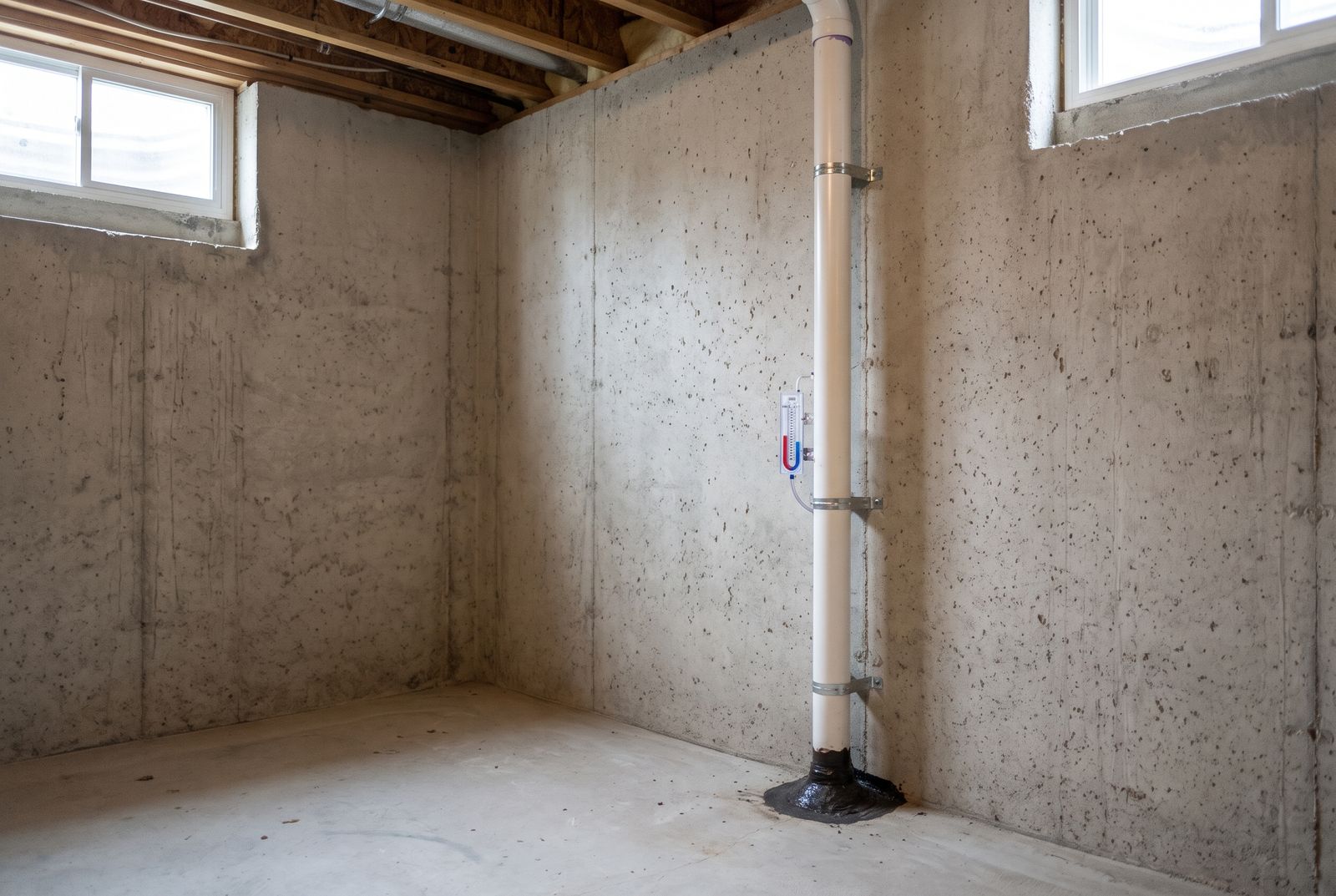
The most common system in Colorado homes with basements or slabs is sub-slab depressurization. A contractor drills a hole through the slab, removes some soil or gravel to create a small pit, and runs PVC pipe from that point up and out of the house. An inline fan, mounted outside or in the attic or garage, never in living space, pulls soil gas from under the slab and vents it above the roof line. Sealing major cracks and the sump pit helps the system work.
Crawl spaces are usually handled with a heavy plastic membrane sealed over the dirt, with the suction point beneath it. Homes with both a basement and a crawl space may need connected suction points.
Most systems include a U-tube manometer on the pipe, a small gauge with colored liquid. When the fan is running, the liquid levels are uneven. If they are level, the fan is not pulling and you should check it. A follow-up test after installation confirms the system brought the level down.
- the manometer liquid is level
- check that the fan has power and is running, then call the installer.
- you finish the basement after mitigation
- keep the pipe and gauge accessible and retest when the work is done.
- the fan gets noisy or rattles
- have it looked at; fans are a wear item and eventually need replacement.
Choosing a radon mitigator
Ask whether the contractor holds a current certification from a national radon proficiency program, such as the National Radon Proficiency Program (NRPP) or the National Radon Safety Board (NRSB), and verify it on the program's site. Ask for a written proposal that shows where the pipe will run, where the fan goes, how the exhaust discharges above the roof, and what post-installation testing is included.
Get more than one proposal. Pipe routing is where bids differ most. An interior route through a closet is often quieter and better looking; an exterior route can be simpler. The contractor vetting guide covers insurance, permits and payment terms that apply to radon work too.
Buying or selling a home
Radon testing is common during Colorado home purchases, usually as part of or alongside a home inspection. Test conditions during a sale are hard to control, so make sure closed-house conditions are agreed in writing. If the result is high, mitigation is a well understood fix and often negotiated between buyer and seller. Ask your real estate professional and inspector how radon is handled in your contract; CO Homes Pro is not a brokerage and cannot advise on transaction terms.
Common questions
Does Colorado have a state radon program?
Yes. The Colorado Department of Public Health and Environment (CDPHE) runs a radon program with information on testing, mitigation, and test kit availability. Its offerings change from year to year, so check the program's website for what is current.
My neighbor tested low. Do I still need to test?
Yes. Radon levels can differ a lot between houses on the same street because of soil, foundation type, cracks and how the house is used. The only way to know your home's level is to test it.
Does a new house need a radon test?
Yes. New construction can have elevated radon too. Some new homes are built with passive radon piping that can be converted to an active system with a fan if a test comes back high. Ask the builder what was installed, and test after you move in.
How often should I retest?
EPA guidance suggests retesting every couple of years, and after any major renovation, foundation work or change in how you use the lowest level. If you have a mitigation system, retest periodically to confirm it is still working.
Questions about a radon result?
Send your question. You will get general guidance and pointers to the state program, not a professional assessment.